Demolishing a brick building inside a building with an Avant 528
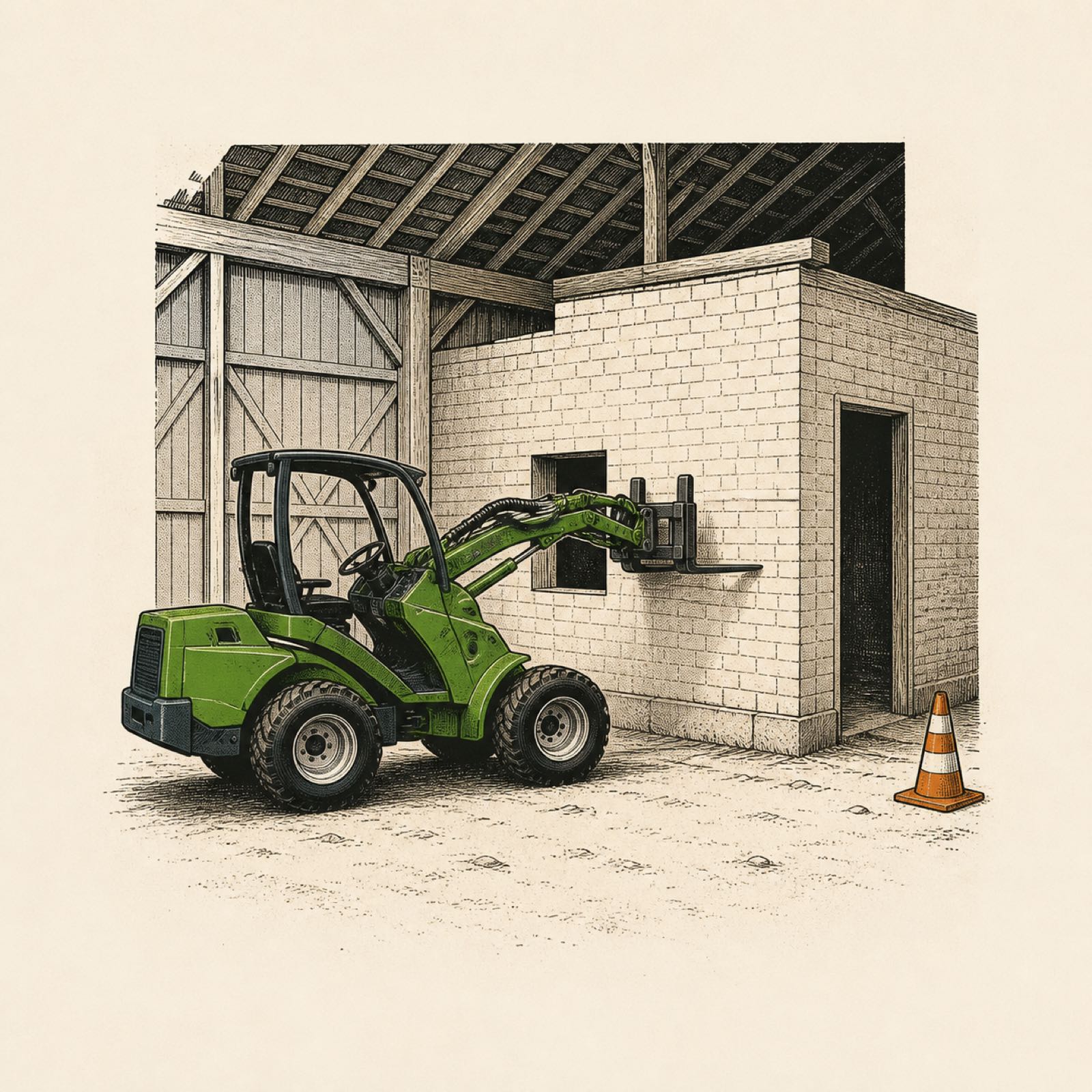
Previous owners left a brick room standing inside one of our outbuildings. I took it down with the 528: pallet forks to push, bucket and grapple to clear.
 Illustration
A building inside a building
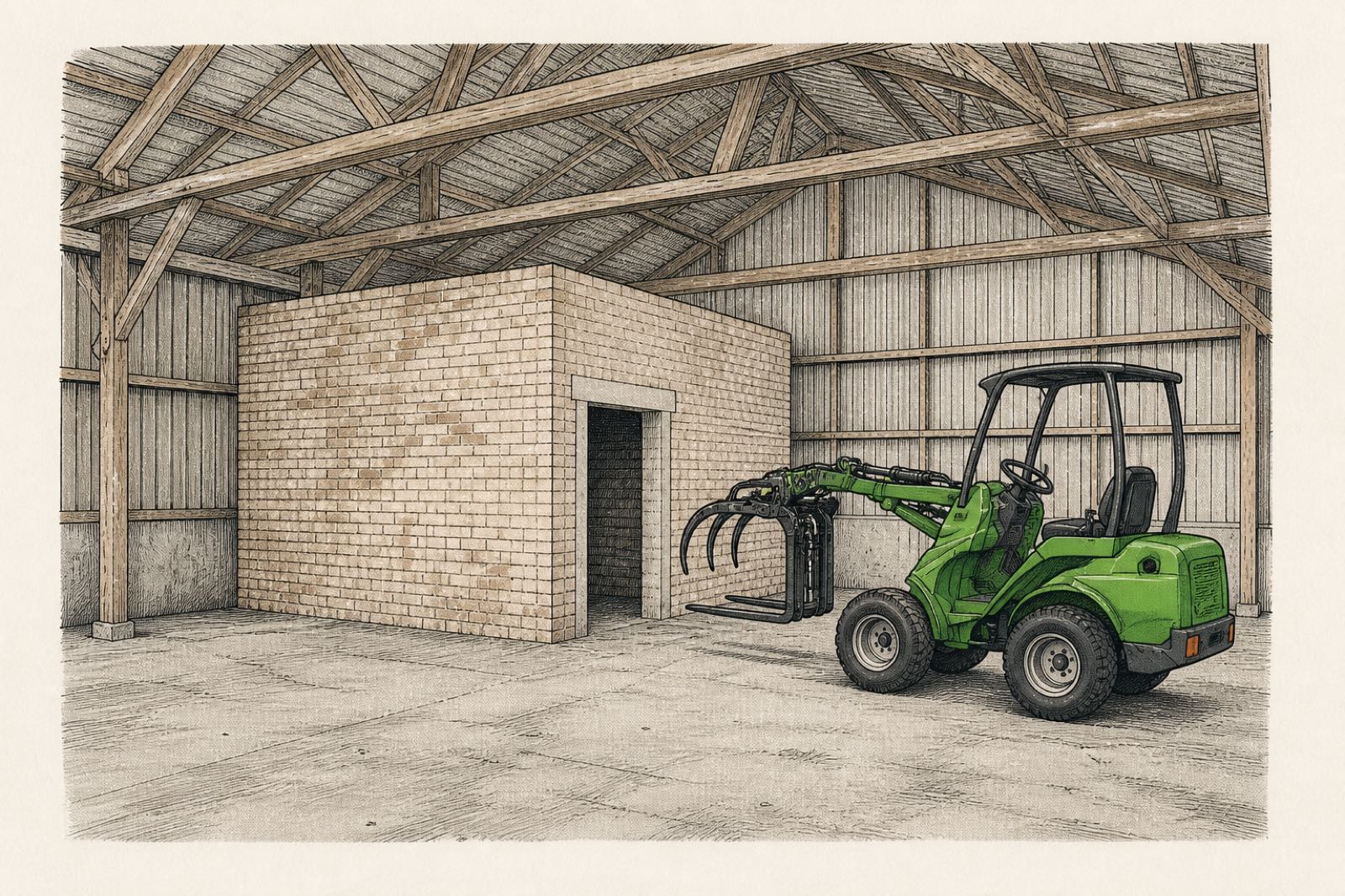
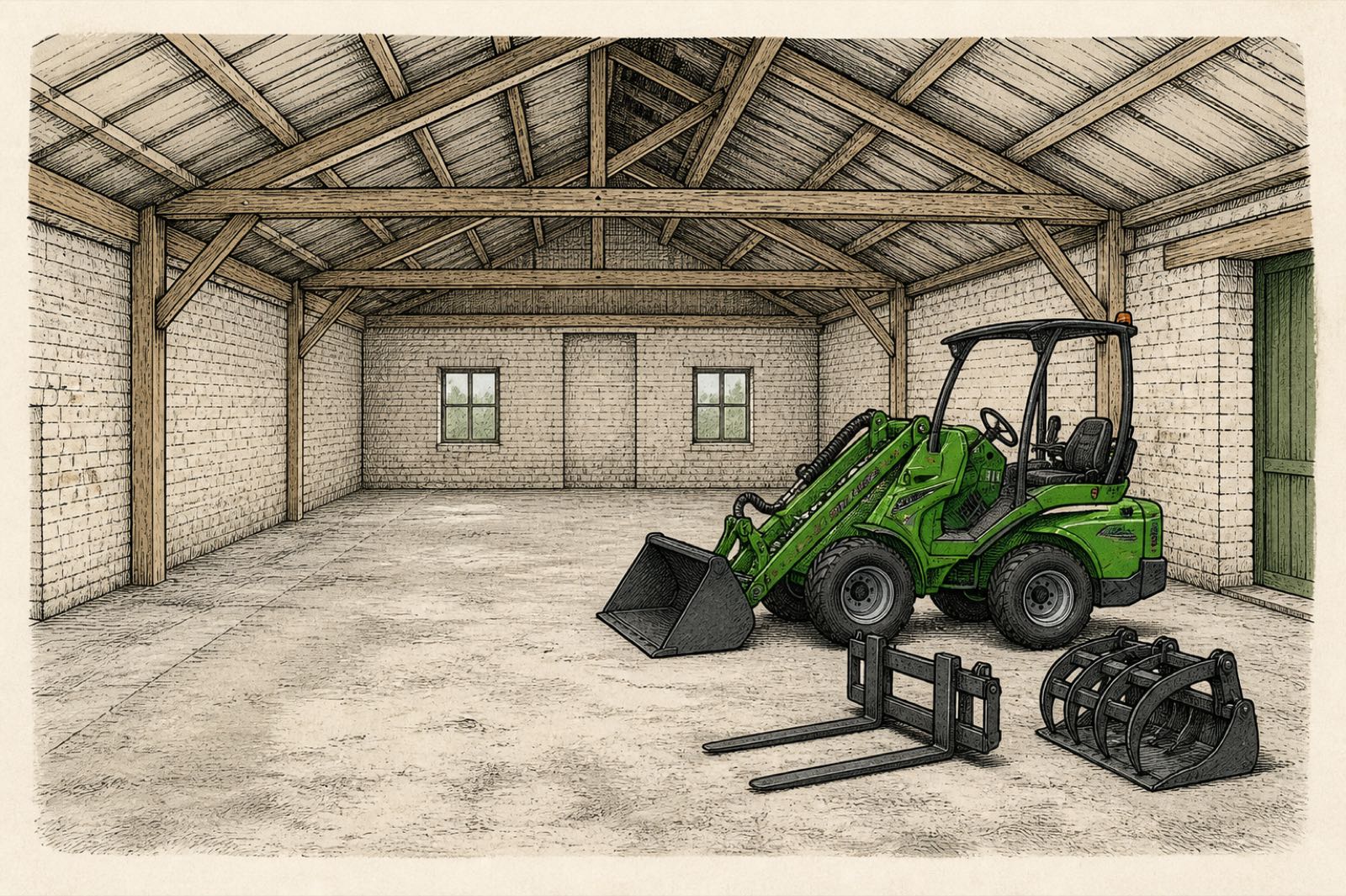
Among the things previous owners left behind on this property was a brick structure built inside one of the larger outbuildings: a masonry room standing under the outer roof, eating a chunk of the floor space. Whatever purpose it once served had long since expired. What I wanted was the space, one open interior instead of a building with a building in it.
Demolishing masonry indoors is exactly the scenario where a compact loader makes sense. A digger doesn’t fit through the door. A sledgehammer fits, but then it’s you against a few tonnes of brick, one swing and one wheelbarrow at a time. The 528 fits through the door, barely.
 Illustration
The setup, and the three constraints
Working inside someone’s roof changes the job. Three things dictated everything:
- The door opening. Getting the 528 into the outer building was a tight squeeze — enough that every entry and exit was done deliberately, not casually. Measure your door before you assume this works for you.
- The outer walls. The inner structure had to come out without so much as scuffing the building around it. That ruled out anything dramatic: no charging at walls, no letting masonry fall where it wanted.
- Dust. Masonry demolition indoors produces astonishing amounts of it, and unlike outdoors, it has nowhere to go. It hangs, it settles on everything, and it follows the machine out the door. This job is why I now own an FFP3 half mask, bought specifically for it. Visibility genuinely suffers while a wall is coming down.
Breaking: pallet forks beat a sledgehammer
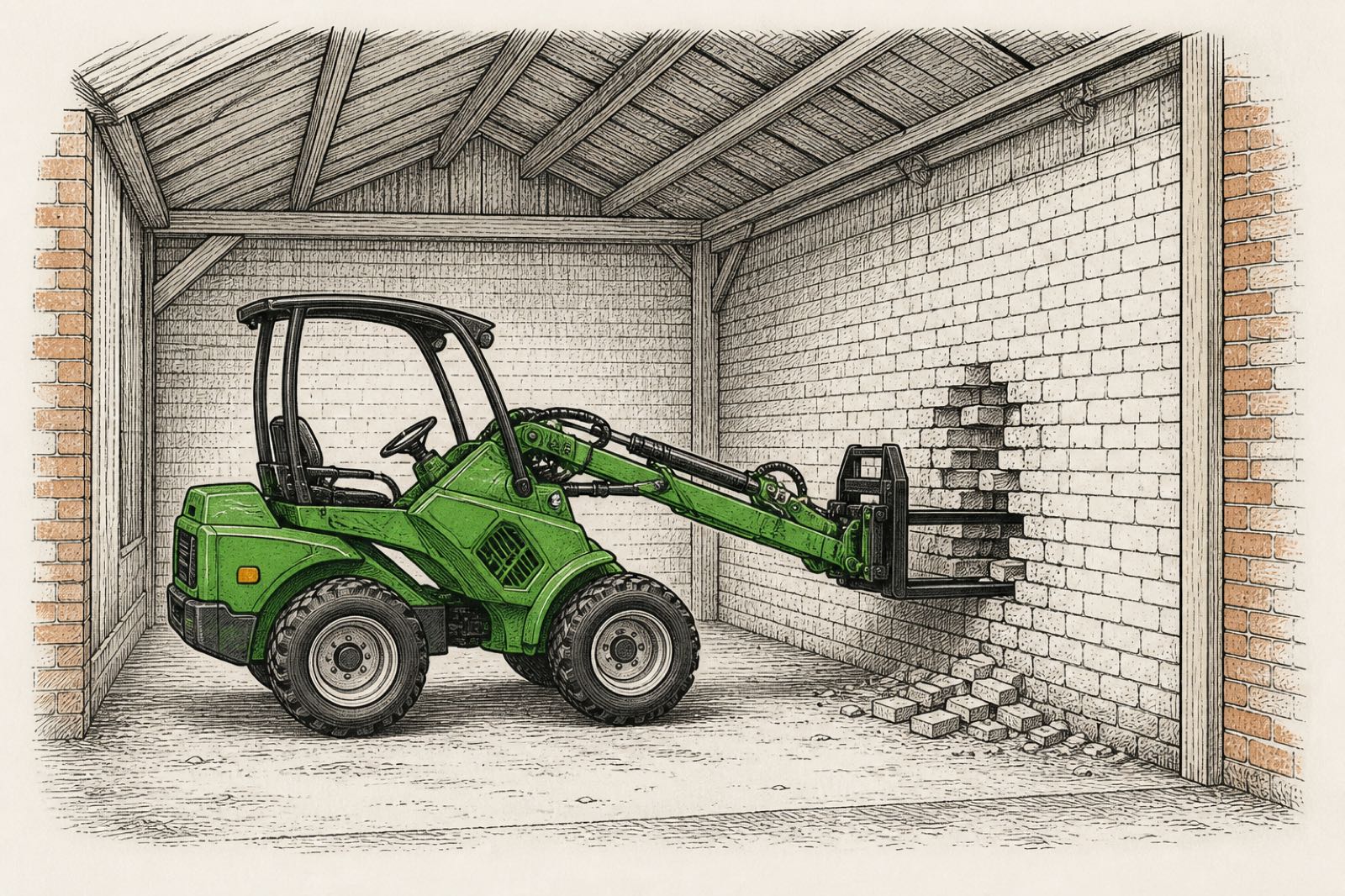
The demolition tool turned out to be the pallet forks. Driven against the brickwork, the machine’s push does what a sledgehammer does, with 1.5 tonnes of hydrostatic drive behind it and you seated a boom’s length from the wall instead of standing under it. Sections of masonry that would have been an afternoon of hand-swinging came apart in controlled pushes: work a section loose, back off, let it fall onto the floor in front of the machine, repeat.
Indoors, next to walls I wanted to keep, the technique was small, deliberate pushes on chosen sections. The boom is precise enough that you never bring down more than the piece in front of the forks.
 Illustration
Clearing: the real job
The part that surprised me: knocking the building down was the quick part. Of the day or two the whole project took, most of it was not demolition at all, it was rubble logistics.
That phase belonged to the other two attachments:
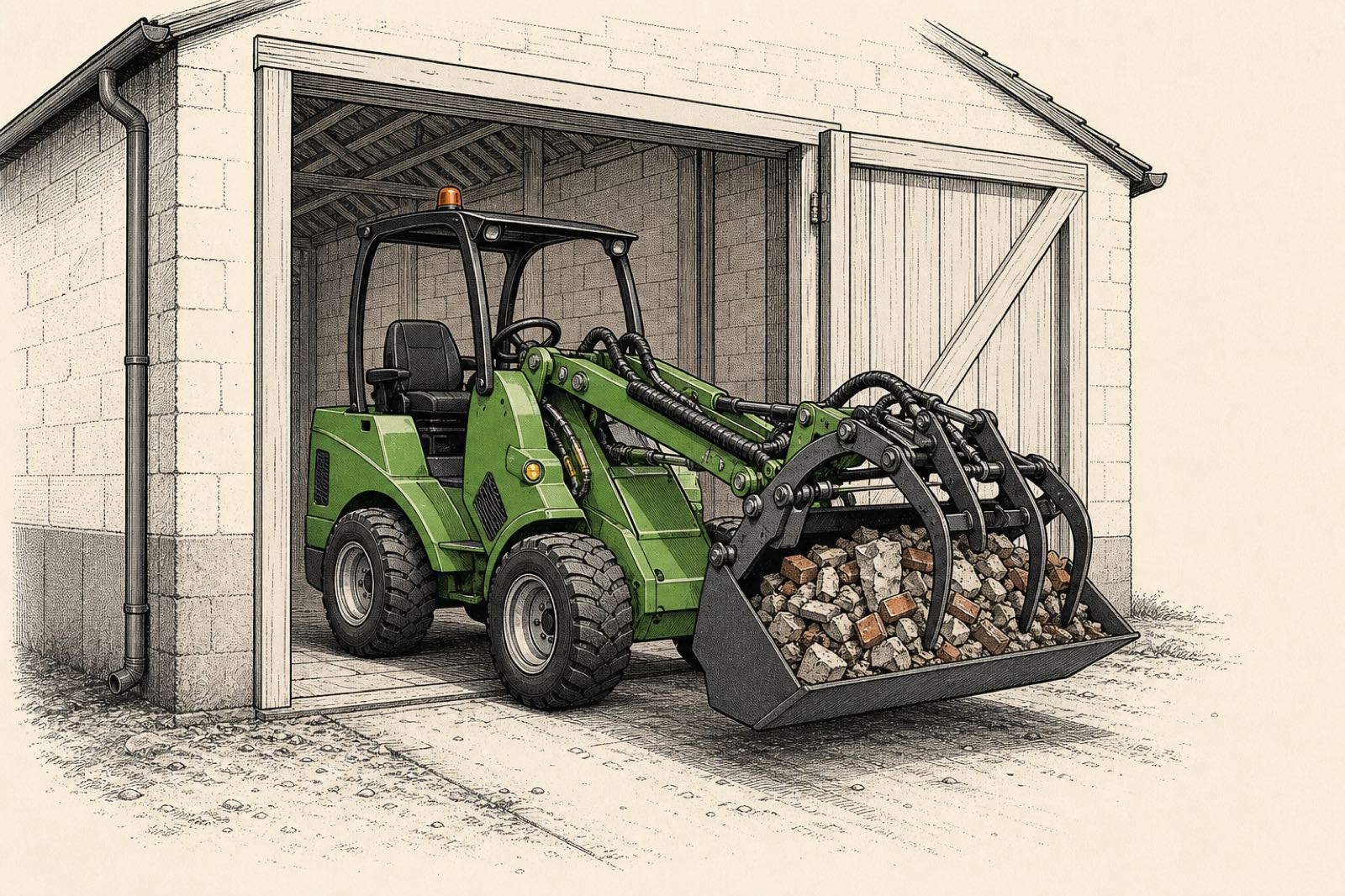
- The standard bucket scooped the loose brick and mortar off the floor, load after load.
- The grapple — the hydraulic clamp that closes over the bucket or forks — handled everything the bucket alone couldn’t: tangled sections still holding together, awkward slabs, debris that would otherwise ride on top of an open bucket and drop off at the door.
The rhythm was the same as any loader job: fill, shuttle out through the door, tip, return. The dust followed every load out.
 Illustration
Where the rubble went
Onto a pile, where it remains. Crushed brick is usable hardcore, so the plan is that it becomes fill under something someday. For now it is a pile. At least the loader that made it can also move it.
The result
One open building instead of a building in a building. The reclaimed floor is now machine and workshop space; the 528 and its attachments live in part of the footprint the brick structure used to occupy. If I did a job like this again, I’d budget my time for the clearing, not the breaking.
 Illustration