Renovating a gravel driveway with an Avant 528
I topped up our worn gravel drive with pea gravel, one bucket at a time: shuttle from the pile, tip in strips, back-drag flat. One tipper load turned into two.
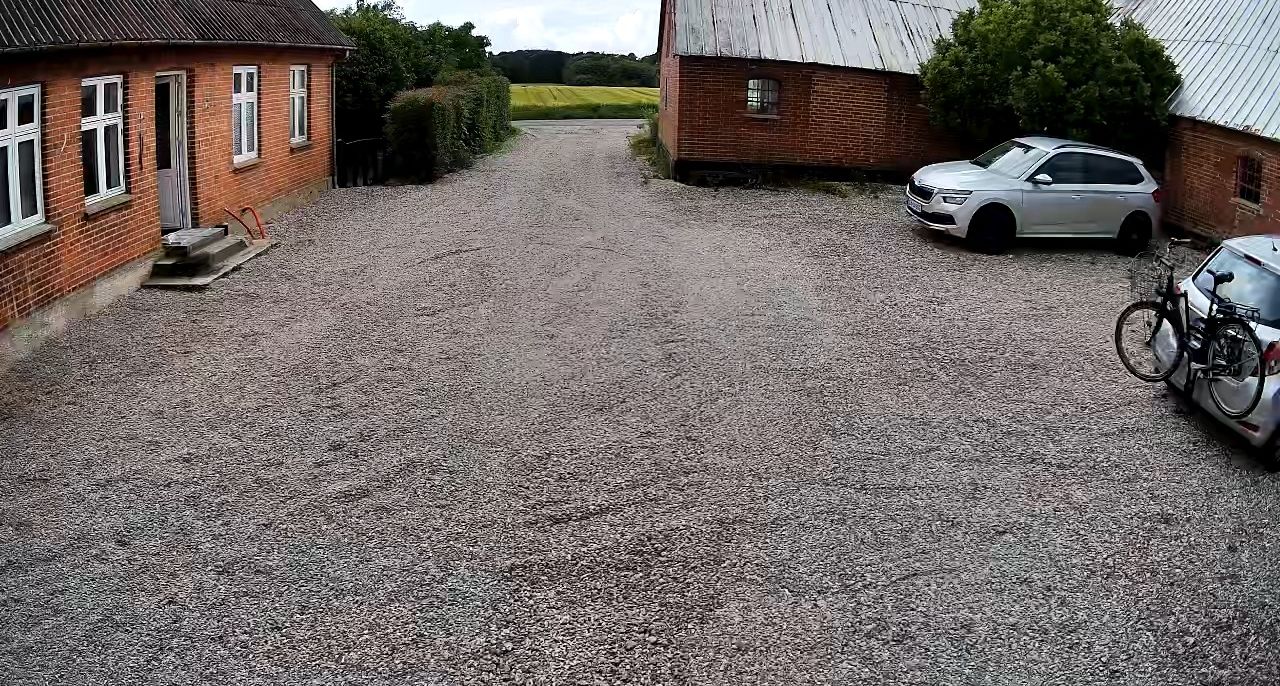
The driveway
A gravel drive on the order of a hundred metres, and it had been quietly wearing out for years. No craters, no washouts, just the gravel layer ground down thinner and thinner, compacted hard, with less and less loose stone on top. The kind of decline you don’t notice until you look at a photo from when you moved in.
The base underneath was still sound, which made this the easy version of a driveway project. No digging out, no membrane, no drainage works. Just a fresh wearing course on top of what’s there.
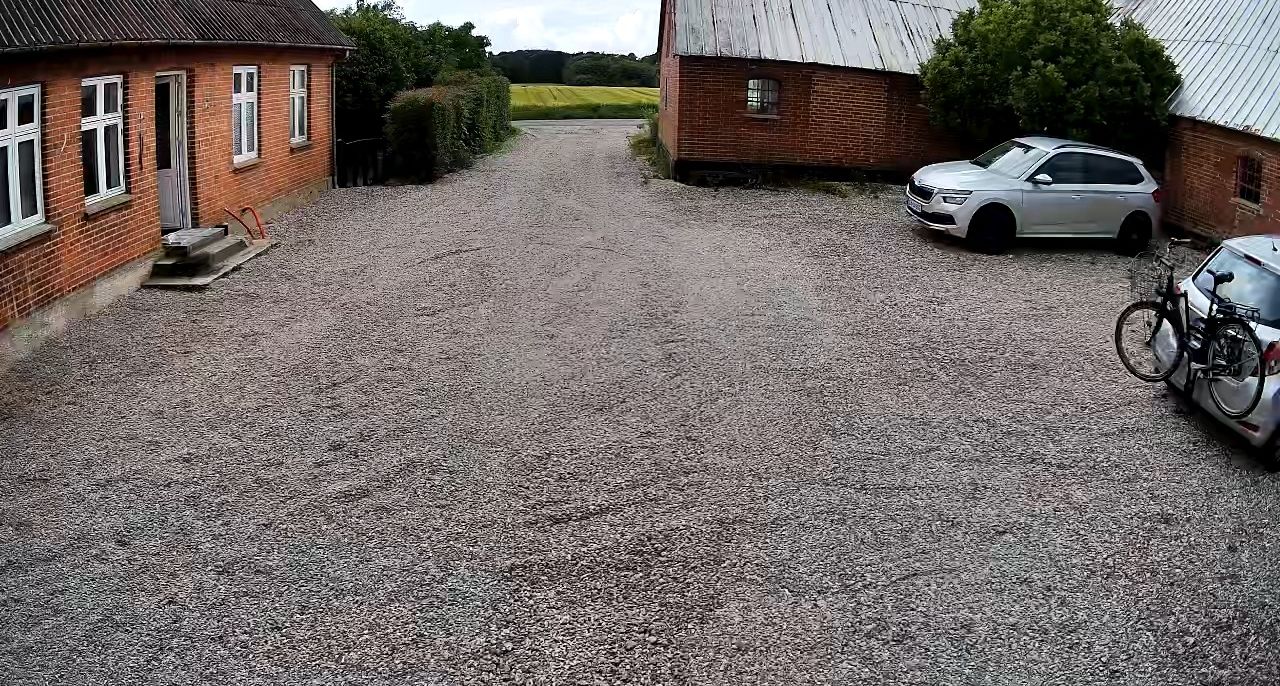
The plan
Top the whole drive up with pea gravel (rounded stone, chosen for the look), spread and levelled with the 528 and its standard 1300 mm bucket. No leveller, no rake, no roller.
Doing this by hand is the job everyone knows and nobody repeats: wheelbarrow, shovel, rake, a ruined weekend per twenty metres. This was exactly the kind of job I bought the loader for.
Delivery day
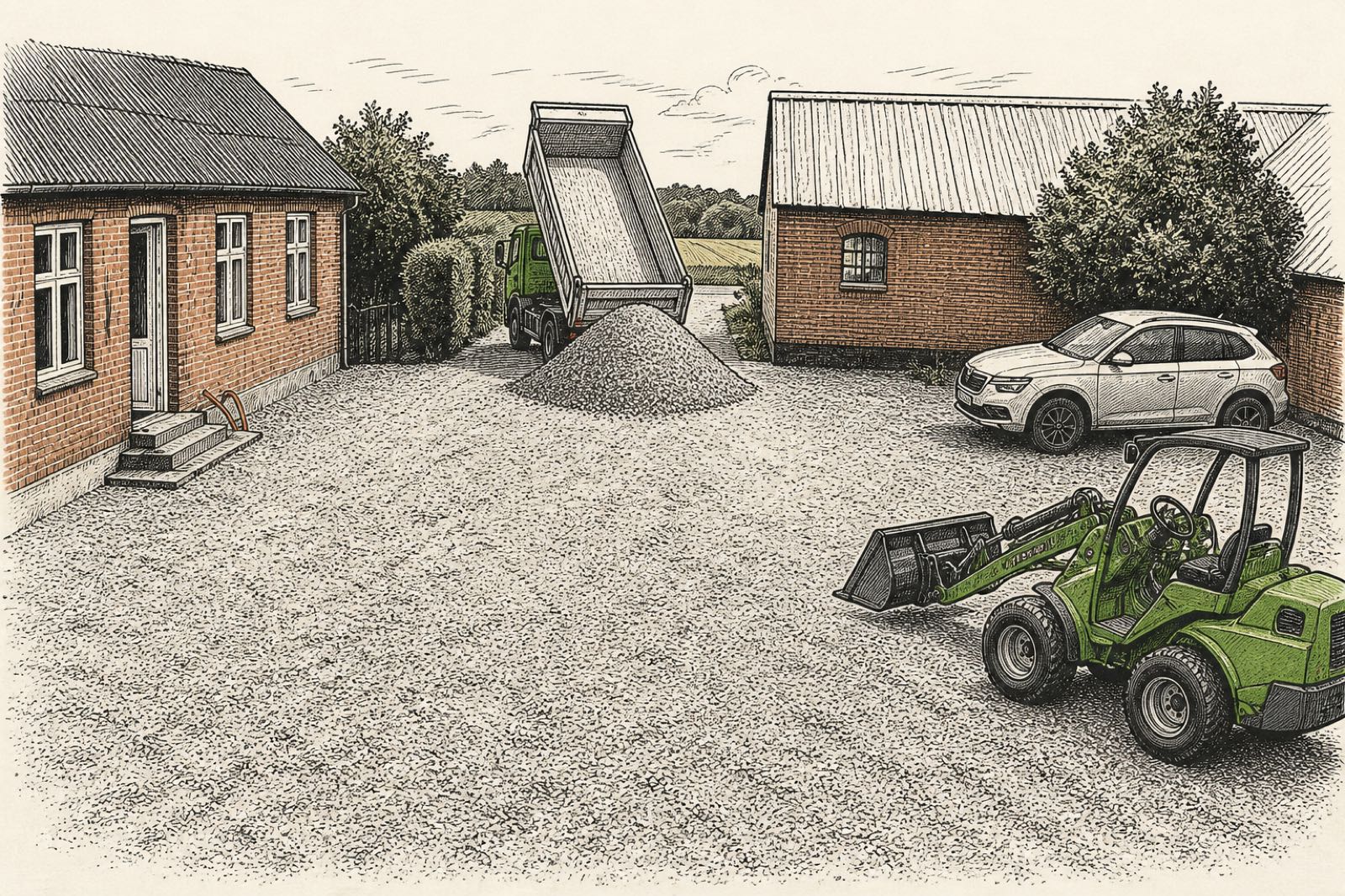
The gravel arrived on a tipper and went into one big pile at the end of the drive. That’s worth thinking about before the truck shows up, because the pile placement decides how far you shuttle every single bucket. Mine went where the truck could tip it, which is not quite the same as where I would have chosen. With a machine the difference is minutes, not hours.
 Illustration
Bucket work
The routine is simple and gets rhythmic fast:
- Fill — drive into the pile with the bucket flat, curl, back out.
- Shuttle — down the drive to the working edge.
- Tip — spread the load forward in a strip as you creep ahead, rather than dumping it in a heap.
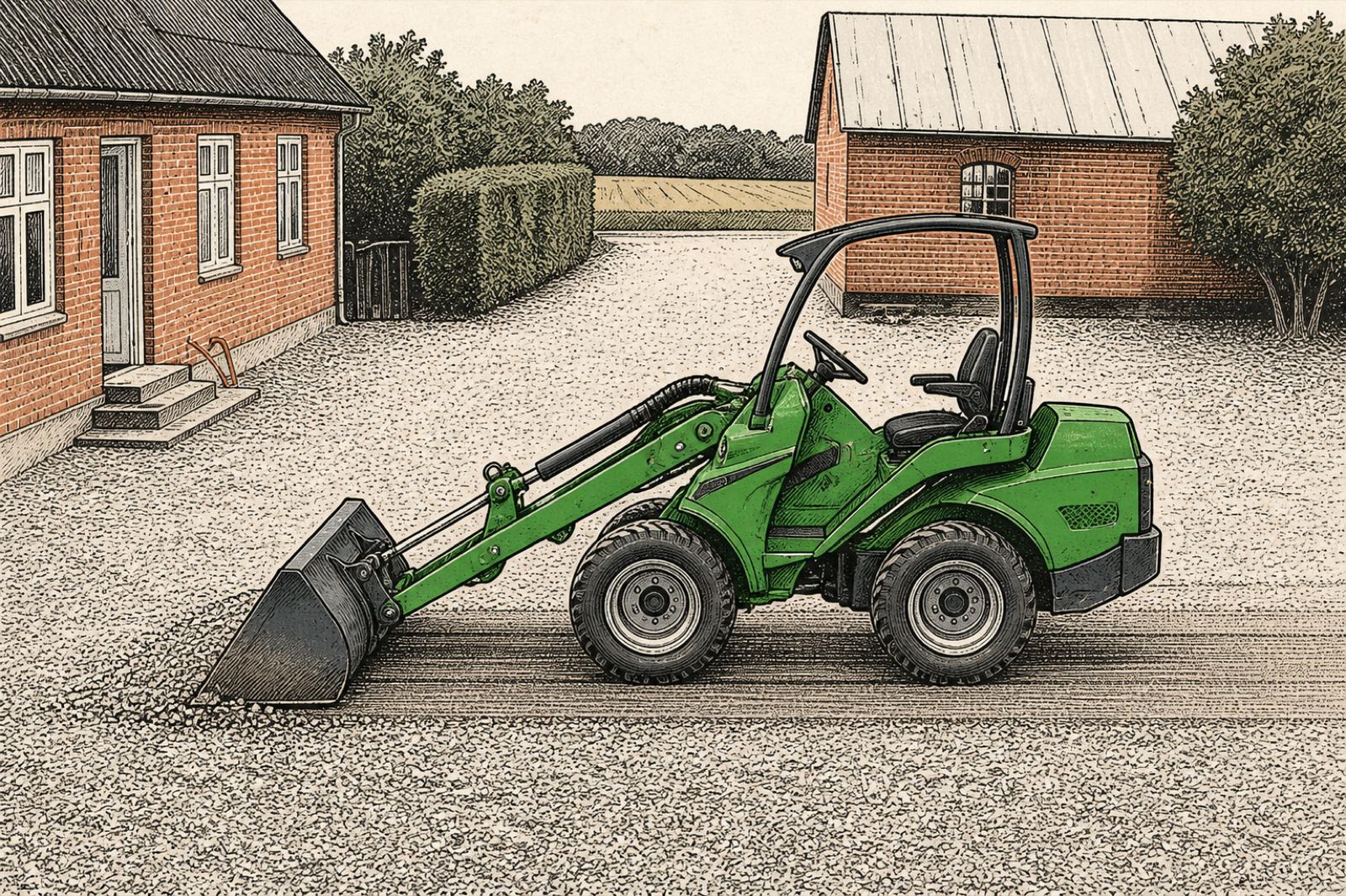
- Back-drag — bucket rolled forward, edge on the stone, and drag it toward you in reverse. The flat back of the bucket planes the surface as you go.
The back-dragging is what turns tipped piles into a flat drive. After a few passes you get a feel for how much down-pressure flattens without gouging, and the 528’s articulation means you can steer the strip you’re smoothing instead of doing everything in dead-straight lines.
The machine’s own wheels do the first pass of compaction for free: every shuttle run drives over gravel you’ve already laid, and by the end the surface has been rolled dozens of times.
 Illustration
The mistake: ordering by optimism
I underestimated the quantity, badly. The first tipper load looked enormous sitting in its pile and then disappeared into the drive at a humbling rate. A thin top-up across a long drive is a lot of cubic metres; it just doesn’t look like it until you start spreading.
So: a second full load, a second delivery fee, and a few days of a half-renovated driveway in between.
How long it took
A few hours of seat time. That’s the number that still surprises me. The same job by hand is measured in weekends, and I had mentally budgeted a full day even with the machine. Instead: pile appears in the morning, drive looks new by lunch. The second load went faster, because by then I’d stopped experimenting with technique and just worked.
There’s no single heroic lift in this job and no clever attachment, just a few tonnes of material that needed to move fifty metres in small, controlled portions and end up flat. The 528 with a plain bucket did all of it. A levelling attachment would have been wasted money for a one-off top-up; next time I’ll just order the bigger load first.